Dr. J. Ibeh Agbanyim | Published on 1/13/2026
Self-reflection is the key to personal growth
Key Points
●
Get off the dance floor and get on the balcony for a time of self-reflection.
●
Don’t be afraid to celebrate your strength while working on your shortcomings.
●
Develop the skill of asking yourself open-ended questions to gain insight.
It’s a good idea every now and then to step back and reflect on how far you have come and actually appreciate the process. Because it’s so easy to get busy on the
dance floor of life’s activities and forget to
get on the balcony to reflect. After all, there’s always room for improvement while navigating the terrain.
Consider this scenario. A prospective client calls on the phone to inquire about your availability for a consultation. You accept and schedule the first session. As the session ends, and you offer to schedule the next session, you start to wonder how the client feels about the first session. Generally, if the client is satisfied, they will continue with the coaching contract.
Another scenario. You meet someone new at a professional networking event and engage them in a conversation on business topics. As the meeting ends, you think to yourself, ‘How did I do? Did I say the right things? Did I say too little or too much?’ Asking these types of questions is natural and appropriate. In fact, it is an internal verbal behavior that can never be outgrown because people are naturally social and wired for acceptance. Simply put, every meaningful meeting—whether professional or personal—leaves you with questions of how you presented yourself.
On a personal note. I remember when our daughter was getting ready to attend an out-of-state college at the young age of sixteen, my wife and I were genuinely hesitant. We did the usual parents’ pep talks and reassured her that everything would work out well. But the question of whether we said and did enough to prepare her for college still lingered. Even after she finished college, we wondered whether we had prepared her for the job market. Those questions are ever present both in personal and professional life.
Now that 2025 has come to an end, two related questions remain: “How did I do?” and “How can I do better?” These are actually not easy questions, but here are four suggestions to help you arrive at reasonable answers.
Take a self-inventory. It is always a good idea to check in with yourself to know how you are doing emotionally, spiritually, socially, and financially. Maybe, reflect on the last four to six months to understand how the next four to six months might go. This means assessing your goals and measuring your progress as well. A periodic assessment will give you insight into what to do next. Without insight, it would be difficult to think clearly and identify your strengths and challenges.
Know your strength. If you don’t know your capabilities and your shortcomings, you can easily become a hindrance to your own future and to people who believe in you. In other words, knowing your strengths is about owning what you are good at and finding ways to keep improving. If you are not sure of how to find your strengths or challenges, asking your loved ones will help. Another helpful way is to take a free personality assessment or hire a certified professional for support. The earlier you hone your self-understanding, the further you can go in self-improvement. Once you get a handle on where you are mentally, you can commit to a reasonable plan.
Make the best of it. Finding your strength can serve as your North Star. It is what will guide you when you apply yourself along the way. Making the best of what you do on a daily basis is a responsibility. It is not what you do only when you feel like it. Rather, it is a commitment to apply yourself every day. That is how character is built, by doing the same thing over and over, even when no one is watching. Over time, it becomes your reputation.
Be kind to yourself and others. Kindness as a psychological construct has the potential to increase your sense of belonging and wellbeing. An act of kindness does not necessarily involve money; rather, a smile, opening a door for someone, or yielding for another driver to go first are some of the minor acts that improve human relationships. By intentionally engaging in acts of kindness on a daily basis, you can improve your mental health and wellbeing.
In the midst of financial, social, political, and spiritual uncertainties, finding ways of centering yourself reduces stress and promotes your overall wellbeing. Some of the ways to do that are through self-reflection, acknowledging your strengths and shortcomings, doing your best on a daily basis, and maintaining kindness toward yourself and others. Intentional living starts with self-care before extending such to others. It is wise to always check in with yourself when your world is not making sense before looking for allies to do life with.
References
Datu, J. A. D., Mateo, N. J., & Natale, S. (2023). The Mental Health Benefits of Kindness-Oriented Schools: School Kindness is Associated with Increased Belongingness and Well-Being in Filipino High School Students.
Child psychiatry and human development, 54(4), 1075–1084.
https://doi.org/10.1007/s10578-021-01299-z
Heifetz, R. A., & Laurie, D. L. (1997). The work of leadership. Harvard business review, 75(1), 124–134.
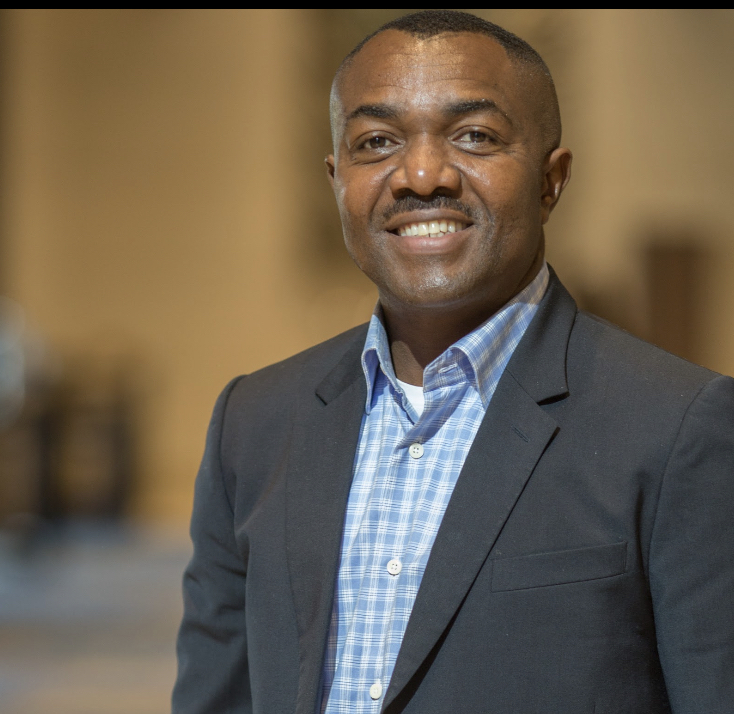
About Dr. J. Ibeh Agbanyim
Dr. J. Ibeh Agbanyim is a coaching psychology adjunct professor at Grand Canyon University. He teaches coaching courses to graduate students using his background in industrial-organizational psychology, evidence-based assessment tools, and experiential learning.
Dr. Agbanyim is an award-winning multiple bestselling author of
The Five Principles of Collaboration, certified mental health and wellbeing in the workplace expert, certified management and leadership executive, and leadership coaching strategist. He is a contributor at
Psychology Today, International Council of Psychologists Newsletter, International Honor Society in Psychology, and
Forbes.
Dr. Agbanyim earned both master’s and doctorate in industrial-organizational psychology from Grand Canyon University, executive certificates from both MIT Sloan School of Management and Harvard Kennedy School. When he is not busy traveling on speaking engagements, he spends time with his family.