Psychological safety is a shared belief that the team is safe for interpersonal risk taking. It can be defined as “being able to show and employ one’s self without fear of negative consequences of self image, status or career.” (Edmondson, 2014)
Why is Psychological safety important?
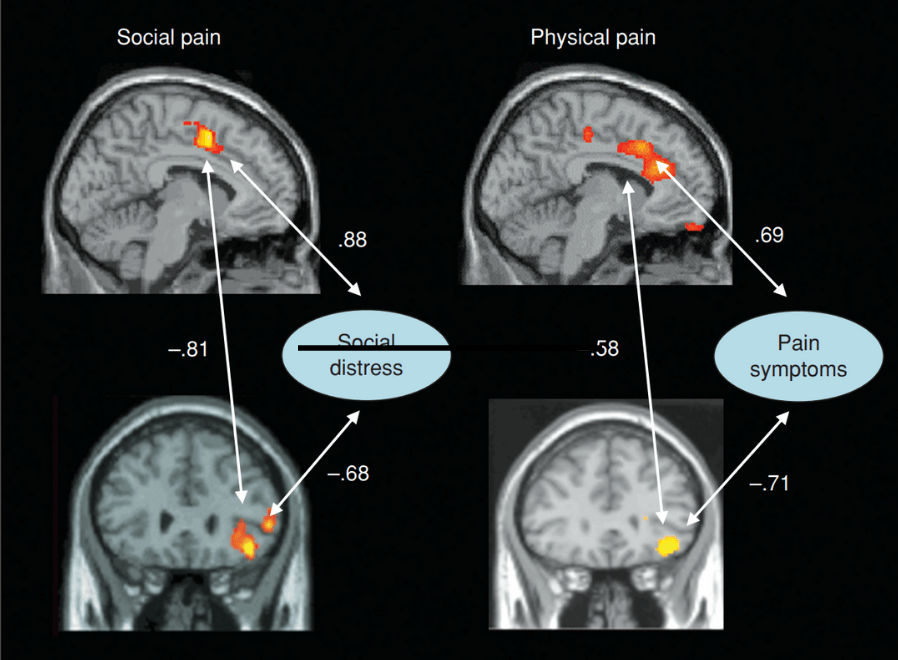
While well-defined parameters exist for defining the importance for physical safety as it relates to being socially acceptable, harmful or helpful, the same can’t be said for psychological safety. Thanks to recent advances in neuroscience, we are now beginning to understand the importance and impact of psychological safety, not only within teams, but for our own health and well-being. For example, it has been demonstrated that the same area of the brain which deals with physical pain also manages emotional pain/exclusion (Figure 1. Eisenberger, 2012).
 |
| Figure 1 |
And it turns out that a “hit” to our phycological safety (through social rejection or unintentional exclusion) can have a stronger impact on that brain region that if we were punched in the face.
When our psychological safety is threatened, our brain is triggered into a stress response which compromises our cognitive abilities. In this state our higher, logical brain, gets offline impacting our ability to think, be creative, make decisions, innovate, collaborate and regulate our emotions.
How can psychological safety activate inclusive teaming?
In 2015 Google published the results of “Project Aristotle” which was an in-depth study to find the factors common to a high-performing team. Their research on hundreds of teams within Google showed that psychological safety within the team was a critical factor to success. Basically, they showed the teams with psychologically safe environments had employees who were trusting, less likely to leave, more likely to harness the power of diversity, and ultimately, were more successful.
How do you build psychological safety?
Based on neuroscience research, we can begin to increase our self-awareness of our own biases and triggers and appreciate different perspectives. This can help us manage our own psychological safety, as well as for those around us. A greater sense of awareness about ourselves activates curiosity and empathy to relate to others and nurture a sense of belonging and trust across a broad spectrum of differences on our teams.
Neuroscience recommends five steps to create belonging and trust on all our teams:
1. Activate a sense of security in all interactions
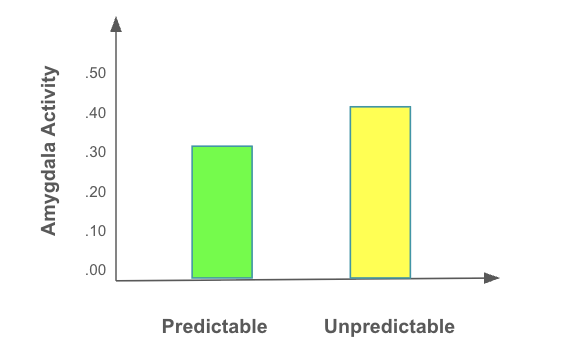
Our brain strives to predict everything in our world, so lack of certainty/security leads to activation of our amygdala (a part in our brain that detects fear and prepares for emergency events) causing a threat state. In fact, during uncertain times, our brain defaults to a negativity bias, which can have an impact on all our decisions and behaviors towards those around us (Figure 2, Davis 2016).
We all are born with a biological need to feel like we are important in the social pecking order, thus being allotted our share of important resources. The science community is beginning to understand the biological importance of esteem, recently conducted research shows that children raised with low self-esteem have a dysfunctional threat response as adults, whereby they are much more reactive to stress.
 |
| Figure 2 |
2. Give autonomy to yourself and others
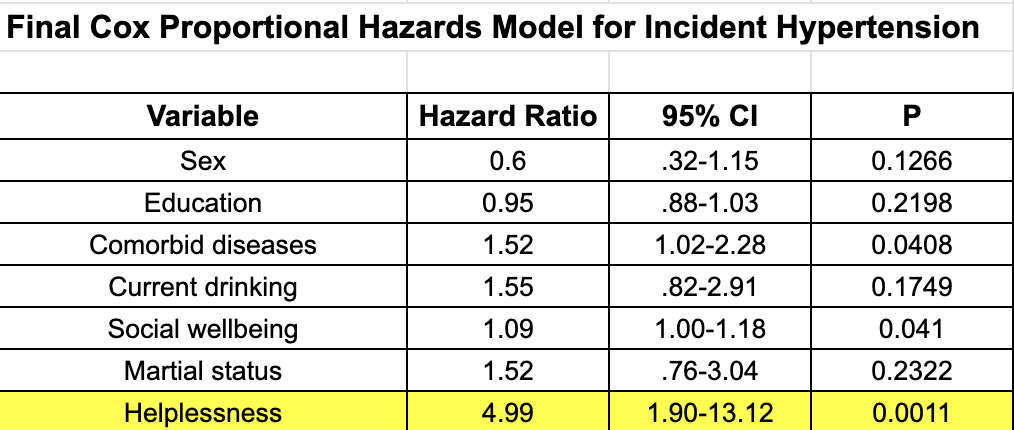
The brain craves a sense of control over our world, even if it’s just perceived, and a lack of feeling like we’re in control can have a negative impact on our overall health and psychological stability. Research has demonstrated this very clearly by showing, in a large sample of adults that the biggest risk factor for hypertension was an sense of helplessness in life, or lack of control over your world, which made people 5x more likely to develop hypertension than people who didn’t report feeling helpless in this regard (Figure 3, Stern, 2009).
 |
| Figure 3 |
3. Value the need for fairness
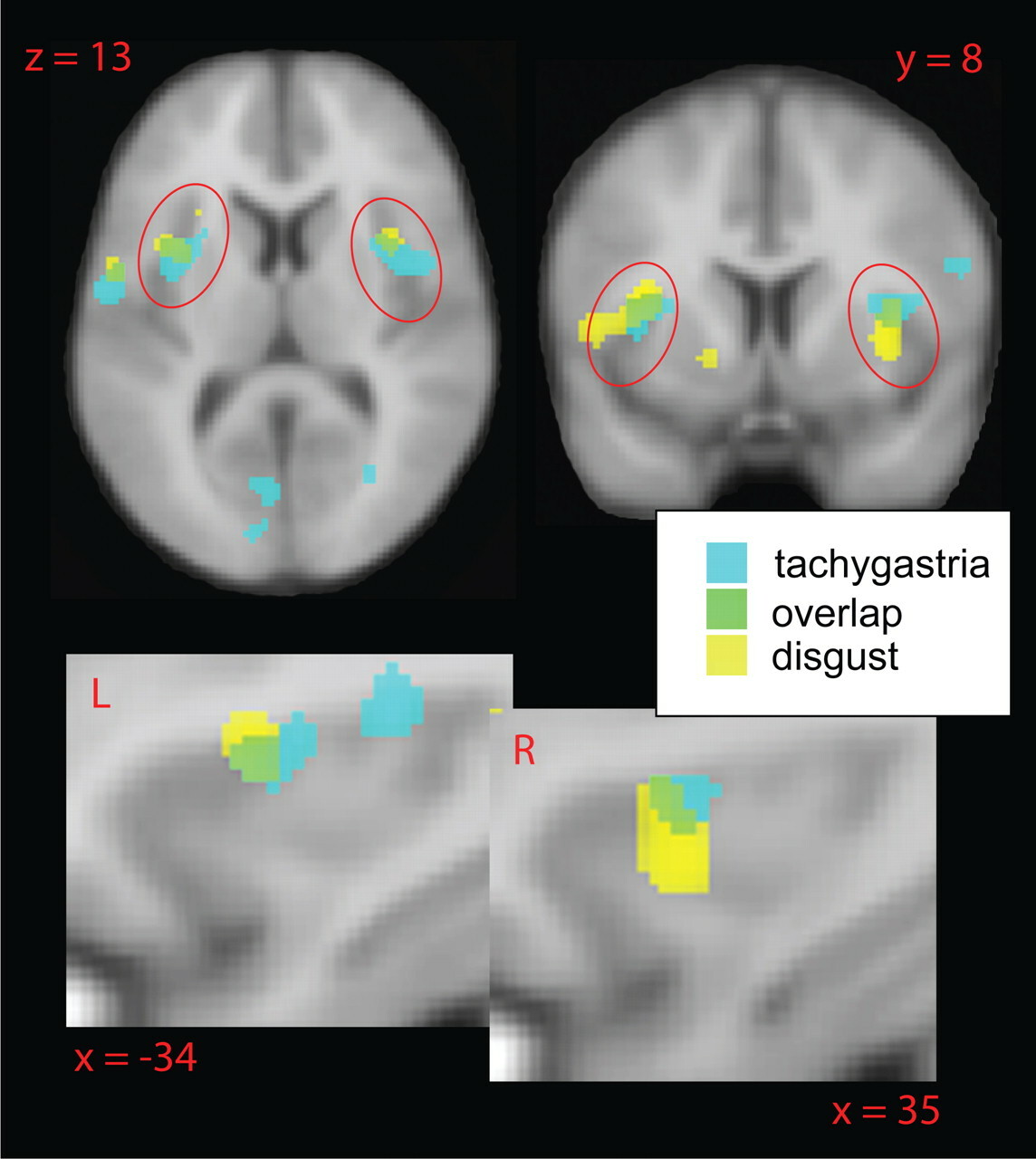
It turns out that the same region of the brain (the insula) that manages our emotional feeling of disgust, also manages our response to being treated unfairly. So, we literally have a “disgust” reaction to unfair people and situations (Figure 4, Tabibnia, 2008). This is a very powerful emotion and can strongly influence our performance and interactions with those around us.
 |
| Figure 4 |
4. Give importance to everyone on the team
We all are born with a biological need to feel like we are important in the social pecking order, thus being allotted our share of important resources. The science community is beginning to understand the biological importance of esteem, recently conducted research shows that children raised with low self-esteem have a dysfunctional threat response as adults, whereby they are much more reactive to stress.
5. Activate a sense of Belonging and Trust
Trust is a critical factor for psychological safety and with good reason: we as humans have an innate need to feel trust and to be trusted. Our brains are wired to perceive anyone or anything that’s different from us as dangerous, so we all have a “self-protection bias” which doesn’t allow us to trust others who are different. While we can overcome this “old brain” bias with our evolved, human brain, when we experience stress and triggers to our psychological safety we revert to that automated self protection bias and disengage from those who are different from us. A profound study recently demonstrated this self-protection bias by showing that the brain region involved in processing empathy for others experiencing pain is only reactive to those people we perceive to be similar to us: i.e. these brain empathy centers do not activate if the person is “different” (Figure 5, XU, 2009). However, a follow up study showed that if you have been exposed to that different racial group sufficiently, then this self-protection bias in the brain disappears. In other words, the more exposure you have to diverse others, the less biased your “old” brain will be (Figure 6, Cao, 2015)
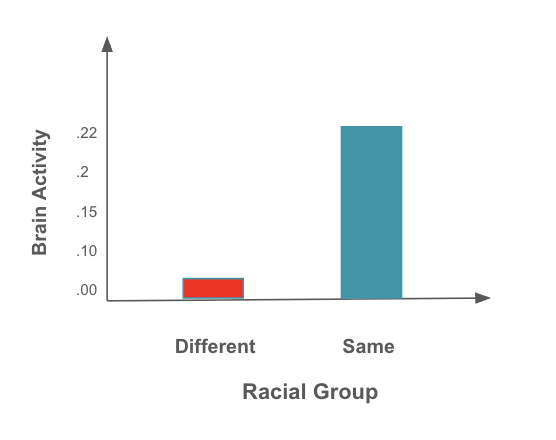 |
| Figure 5 |
References
- MeCao, Y.. Conteras-Huetra, L.S., McFadyden, J. and Cunnington, R (2015). Racial Bias in neural response to other’s pain is reduced with other-race contact. Cortex, 70,68- 78.
- Davis, F.C., Neta, M., Kim, M. J., Moran, J. M,. & Whalen, P. J (2016). Interpreting ambiguous social cues in unpredictable contexts. Social Cognitive and Affective Neuroscience, 11, 775-782
- Edmondson, A.; Lei, Z. (2014). “Psychological Safety: The History, Renaissance, and Future of an Interpersonal Constract”. Annual Review of Organizational Psychology and Organizational Behavior.
- Eisenberger, N. (2012). Psychosom Med. Feb-Mar; 74(2):126-35.
- Stephen L. Stern, M.D., Rahuld Dhanda, Ph.d., and Helen P. Hazuda, Pd.D. Helplessness Predicts the Development of Hypertension in Older Mexican and Europrean Americans. J Psychosom Res. 2009 Oct; 67(4): 333-337.
- Xu X1, Zuo X, Wang X, Han S. Do you feel my pain? Racial group membership modulates empathic neural responses.
About Hasan Rafiq
Hasan is a distinguished workplace strategist and a dedicated practitioner in the realms of Diversity, Equity, Inclusion, and Belonging (DEIB). With an impressive background encompassing over 15 years of executive coaching, organizational development, HR transformation, and leadership development, Hasan's expertise is renowned in driving positive change within organizations through coaching senior executives on DEIB.
His unwavering commitment to innovation has led him to create transformative systems and tools that foster greater equity within workplaces. In recognition of his groundbreaking work, Hasan was honored with the prestigious
2019 DEI Innovator of the Year and
DEIB Leader of the Year awards by Great Places to Work, solidifying his reputation as a trailblazer in the field.
Throughout his career, Hasan has consistently demonstrated his ability to construct equitable systems within organizations, placing DEIB at the very core of employee engagement and development strategies. As the Diversity, Equity, and Inclusion Leader Meta, he spearheaded and co–developed the Coaching for Inclusion practice which expanded quickly to enable executives to build their personal inclusion competencies to nurture a culture of belonging on their teams.
Before his tenure at Meta, Hasan cultivated his expertise through progressive roles within the HR functions at EY, gradually transitioning into global leadership positions with a focus on DEIB. Eventually, he assumed the pivotal role of
Diversity, Inclusion, and Belonging Leader for the United States, where his transformative efforts impacted over 15,000 employees across 29 offices. During his earlier tenure at EY, Hasan notably launched the first Women's Professional
Network in the Middle East and North Africa region, encompassing a diverse community of over 6,000 professionals from more than 200 nationalities. Additionally, he played a key role in designing and globally deploying HR Business Partner Inclusion Development Coach Training Program, effectively accelerating inclusion and mitigating biases in talent processes.
Hasan is a distinguished Professional Certified Coach. Currently, he spearheads the esteemed Coaching for Inclusion practice, catering to C-suite executives and senior leaders, and further propelling the transformative power of DEIB within
organizations.
Current Role
VP - Organizational Culture & Diversity
Macmillan Learning
As Vice President of Organizational Culture and Diversity at Macmillan Learning, I'm driving
educational innovation through strategic DEI initiatives. My focus includes:
- Developing and implementing innovative DEI strategies aligned with business objectives
- Managing impactful programs and initiatives from conception to completion
- Leveraging data analysis to measure DEI impact and inform decision-making
- Building partnerships across all organizational levels, including leadership and ERGs
- Advising and empowering leaders to implement effective DEI strategies
- Fostering a culture of belonging that reflects the diversity of the learners we support
- Driving thought leadership and innovation in DEI within the educational technology sector
Committed to creating an inclusive environment where diverse talents thrive and contribute to powerful, engaging learning experiences.